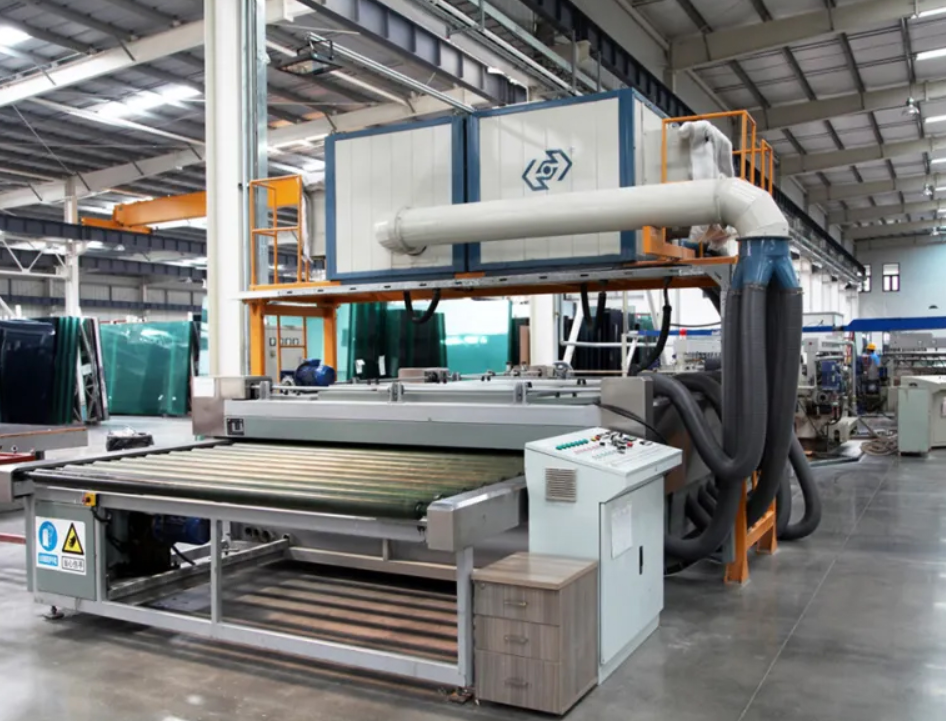
The proper and rational use of an edging machine not only ensures the smooth progress of production but also serves to extend the machine’s service life. Here, we outline the key points to observe for the correct operation of an edging machine.
1. For any newly purchased edging machine, it is imperative to read the operating manual before use. You should only proceed to operate the machine after fully understanding its transmission principles, the functions of its various handles, handwheels, electrical buttons, and water and air control valves, and after mastering the necessary maintenance and upkeep procedures.
2. The condition of the grinding heads has a significant impact on the quality of the glass grinding finish. The position and movement clearance of the grinding heads are pre-calibrated at the factory; during operation, aside from adjusting the forward and backward movement of the heads, other settings should generally remain untouched to avoid compromising grinding quality. Furthermore, the retraction distance of the grinding heads should not be excessive; doing so risks damaging the waterproof sleeves—potentially causing water leakage—and may also lead to motor burnout.
3. The adequacy of the cooling supply also plays a major role in the effectiveness of the grinding process. You should regularly inspect the cooling lines for any signs of blockage. This is particularly critical for straight-line edging machines, where the lines are prone to blockage by brush bristles—a condition that is often difficult to detect but results in insufficient cooling, thereby compromising the quality of the edging work.
4. When adjusting the speed of an edging machine equipped with a stepless speed variator, it is essential to perform the adjustment while the machine is powered on and running; attempting to adjust the speed while the machine is stationary risks damaging the variator mechanism.
5. Precautions for operating irregular-shape edging machines: ① The uniformity of the height of the vacuum suction cups on the machine’s worktable has a substantial impact on the grinding outcome. During assembly, manufacturers perform a self-grinding process on the five sets of suction cup bases and select suction cup rubber pads of uniform thickness to ensure that all suction cups are at a consistent height. Therefore, under normal circumstances, you should avoid disassembling or reassembling the suction cups. If a suction cup rubber pad becomes damaged, it must be replaced with a new pad of identical thickness. ② After a period of use, the vacuum pump on an irregular-shape edging machine may experience a decline in vacuum pressure (i.e., reduced suction power) due to factors such as water ingress. Consequently, it is crucial to regularly inspect the pump and troubleshoot any issues; operating the machine with insufficient suction not only compromises grinding quality but also significantly increases the risk of safety-related accidents. 6. Precautions for Using Straight-Line Edging Machines: Straight-line edging machines (including straight-edge, round-edge, and beveling machines) operate by utilizing front and rear pressure plates to clamp the glass and drive it in a linear motion for grinding. Two points must be strictly observed during operation: ① The contact surfaces between the front and rear pressure plates and the guide rails must be lubricated frequently; otherwise, premature wear of these working surfaces will compromise the machine’s normal service life. Although some models are equipped with automatic lubrication systems, the lubrication lines should still be checked regularly to ensure they remain unobstructed. ② When clamping the glass, the clamping force must be set to an appropriate level; if too loose, it will negatively affect grinding quality; if too tight, it will increase the machine’s load, making it prone to vibration and “stick-slip” phenomena, and—when grinding thin glass—greatly increasing the risk of shattering the glass. The appropriate clamping force can be determined by testing with a slightly oversized piece of glass: clamp the glass in the central section of the machine while the machine is powered off, then attempt to manually move the glass with both hands; the clamping force is considered properly adjusted when it is just tight enough that you are unable to dislodge the glass by hand.
7. Precautions for Using Template-Guided Edging Machines: ① The template (jig) used in a template-guided edging machine has a profound impact on grinding precision. The working surface of the template plate must be manufactured with precise dimensions and shape, and possess a high degree of surface finish. If using a template for irregular shapes, the transition points between different sections must be smooth and seamless. ② When replacing the template or the suction cup, it is essential to ensure that the working surface of the suction cup remains perfectly level; failure to do so will compromise the quality of the grinding operation.
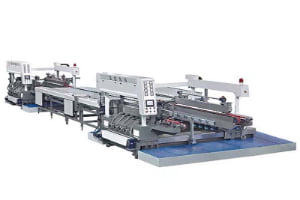
8. Precautions for Using Double-Edging Machines: ① Double-edging machines are considered high-end edging equipment; for optimal results, it is highly recommended to assign a dedicated team of two to three operators to the machine to ensure that all procedures are executed correctly. ② In the event of a programming error or mechanical malfunction within the double-edging system, it is best to request that the original manufacturer dispatch a technician to perform the necessary repairs and calibration. Generally, users should refrain from attempting to dismantle or repair the machine themselves, as doing so risks corrupting the programming and causing production downtime.